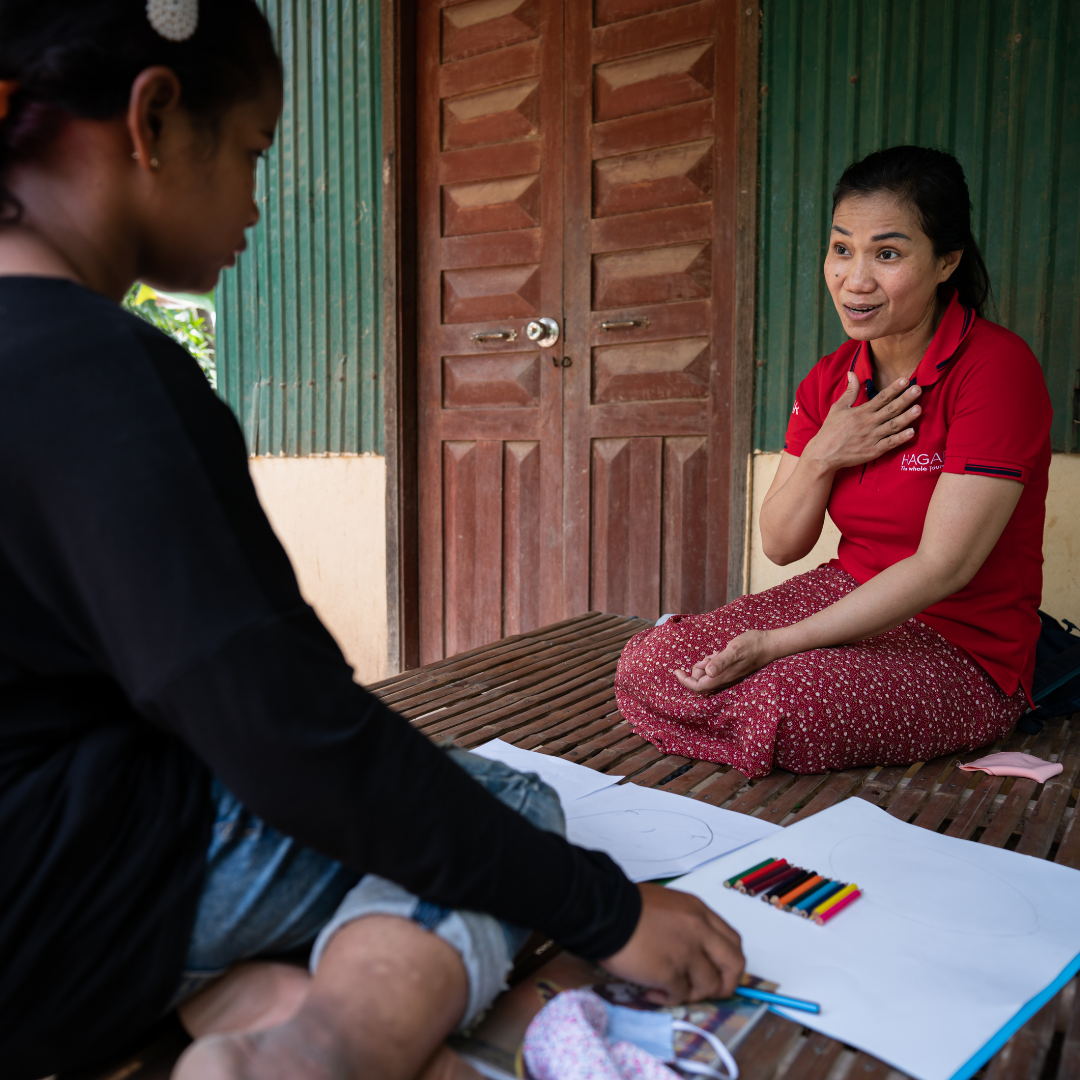
Hagar programme photography

Forced Scamming | Human Trafficking

The message you see is only the end of the story.

The person behind a scam message may also be someone being exploited. Scroll to follow the chain backwards, from the message on your screen to the moment the trap first began.

Scroll to uncover the story

What You See

A scam message.

Online fraud makes us focus on the message, the link, the request and the money.

Forced scamming asks us to look behind the screen. Some people are recruited through deceptive job offers, isolated, controlled and compelled to run online scams under threat and coercion.

The fraud may begin on your phone. The exploitation began much earlier.

Follow the Conversation

One message. A much longer chain.

The message sequence below is an illustrative reconstruction showing how deceptive recruitment can move into isolation, coercion and forced online fraud.

Stage 01 | The Opportunity

It can begin with something ordinary.

A job. Better pay. Travel. A chance to support a family. The first contact can look like a normal recruitment conversation.

Stage 02 | The Movement

The offer becomes a route into isolation.

Travel and logistics that appeared helpful can place someone far from home and dependent on the people who recruited them.

Stage 03 | The Control

Choice begins to disappear.

Isolation, surveillance, threats and control can be used to prevent someone from leaving or refusing the work demanded of them.

Stage 04 | The Forced Scam

Then the next conversation begins.

The person sending fraudulent messages may now be working under coercion. The message that reaches you can be the final visible step of a trafficking chain.

‹
Unknown
ⓘ
Illustrative reconstruction
Hi. We have a job opportunity.
Good salary. Travel can be arranged.
What kind of work?
Send your details. We will organise transport.
When do I leave?
What looked like an opportunity is becoming isolation.
You cannot leave.
You must work.
The conversation has changed. The control is now physical.
Message the next person.
Keep them talking.
Hi. We have a job opportunity.
Hagar programme photography

And Then, Silence

Closing the app does not end the exploitation.

For someone being trafficked, the threat can continue long after a message disappears from your screen.

Hagar programme photography

After Exploitation

Freedom is the beginning of another journey.

Recovery can require safety, trauma-informed support, legal assistance, education, vocational opportunities and long-term care shaped around each survivor.

01
Safety A secure place to begin recovering.
02
Healing Trauma-informed support for what a survivor has experienced.
03
Justice and support Help navigating protection, legal and practical needs.
04
A future forward Education, skills and opportunities that support independence.

Trace It Back

You saw how the scam ends. Now see where it really began.

Keep scrolling. Each step moves further away from the message you received and closer to the first deception.

The Chain, Backwards

From your screen back to the beginning.

The fraudulent message is the point where the hidden exploitation finally becomes visible to you.

The scam message This is the part visible to the person receiving it.
Forced online fraud The sender may be acting under coercion rather than freely.
Threats, surveillance and control Refusal or escape can carry serious consequences.
Isolation Distance and dependency make leaving harder.
Travel and recruitment What appeared to be help can become the route into exploitation.
The opportunity A promise of work can be the first deception in the chain.

This Is Where the Scam Really Began

Before a fraudulent message was sent, someone may already have been exploited.

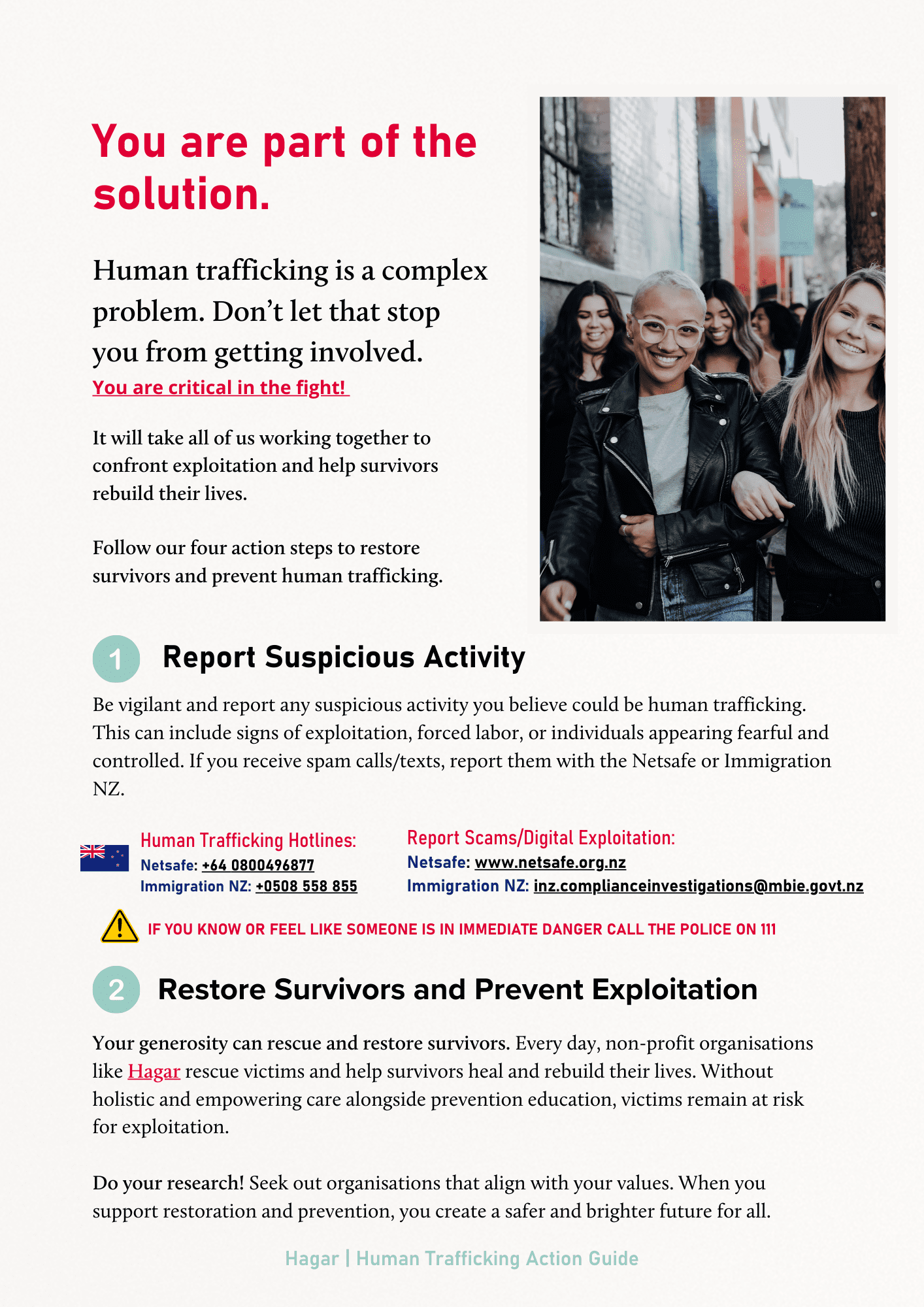
Help Hagar support survivors of trafficking, slavery and abuse as they rebuild their lives with safety, dignity and hope.

Help Survivors Rebuild
‹
Unknown
ⓘ
Illustrative reconstruction
Your travel is arranged.
Okay. Thank you.
Great. We'll see you soon.
A conversation can look completely ordinary right up to the moment the trap closes.

Forced to Scam: The Hidden Crime Trapping Thousands

Forced scamming is one of the fastest-growing forms of human trafficking today.

Across Southeast Asia, criminal networks use social media to lure job seekers with fake offers that appear legitimate, often promising high salaries and covering travel costs.

On arrival, victims face a stark reality: their passports and phones are taken, and they are isolated in a foreign country. Under threat and abuse, they are forced to run online scams. Escape is not an option.

Many are skilled professionals, trapped in a criminal system generating over US$11 billion a year.

This video reveals how victims are trapped and exploited by forced scamming operations — and how Hagar helps survivors rebuild their lives. 

Your support makes this possible.

Forced to Scam: The Hidden Face of Human Trafficking

Every day, countless scam messages reach our phones – messages we often delete without a second thought. But behind many of these are people being forced to carry out online fraud under threat and coercion. These individuals are not criminals – they are victims of human trafficking, trapped in exploitative scam centres.

Together, we can respond with compassion and action.

The facts:

  • Over 50 million people worldwide are estimated to be living in modern slavery, including forced labour.

  • Scam centres rely on trafficked individuals to operate large-scale digital fraud.

  • This industry generates over US$11 billion annually – but collective efforts can disrupt its reach.

By raising awareness and supporting targeted interventions, we can help survivors find a way out, and prevent others from being exploited. Every step we take brings hope, safety, and justice closer.

What Are Scam Centres?

Scam centres are unauthorised operations, often taking over old hotels, warehouses or similar buildings. Trafficked individuals are compelled to run online scams under strict surveillance. Their freedom is heavily restricted, and they often live under constant pressure and fear.

Recently, Hagar responded to distressing reports of organised scam centres in Cambodia. These places held women, men and children who had been trafficked across borders and coerced into online scams. The conditions were deeply distressing—characterised by isolation, coercion and fear.

Through coordinated operations with authorities, individuals were safely removed from these centres. Each person has begun a gradual recovery journey, supported by measures that promote emotional healing and a renewed sense of safety and hope.

Our trauma-informed care model prioritises survivors’ dignity, autonomy and long-term wellbeing. We focus on emotional support, practical life-skills development and respectful reintegration back into their communities.

How Scam Chains Operate

Recruitment through fake job ads
Traffickers lure victims with false promises of legitimate work, often advertised online or through informal networks.

Confiscation of passports and documents
Once under control, victims often have their identity documents taken to prevent escape or seeking help.

Surveillance and threats to enforce labour
Victims are monitored and threatened with violence or harm to their families to ensure compliance.

Use of complex tech networks to evade detection
Traffickers use encrypted apps, digital payments, and layered platforms to avoid identification and prosecution.

Trapped Online: Ree's Escape


Ree never wanted to leave his village.


He and his wife, Ka, were trying to support their children.
A broker promised them good work in Thailand.
Instead, they were taken across the border illegally and trapped in exploitation.
They worked long hours without proper food, safety, or fair pay.
Ree’s disability made the dangerous conditions even harder to survive.
Ka remembers hiding from police raids and feeling broken.
Eventually, Thai authorities found the work site and rescued them.
They returned to Cambodia with no savings and deep trauma.
With support from Hagar Cambodia and others, Ree and Ka are rebuilding their lives at home.

Supporting Survivors Every Step of the Way

When survivors are freed from scam centres, their recovery begins immediately. They first receive urgent medical attention and are placed in safe, secure accommodation to support their immediate well-being.

They then begin trauma-informed counselling and therapy to address the emotional and psychological effects of their exploitation. Our team also works closely with their families to assess and support safe options for reunification.

Survivors receive assistance throughout legal proceedings. Advocates help protect their rights and guide them through processes such as witness protection and court appearances when necessary.

To support long-term recovery, survivors can access education and vocational training programmes that equip them with skills for independent living. Gradual reintegration into their communities follows, supported by ongoing case management, peer support networks, and economic empowerment initiatives. These services help survivors rebuild their lives with dignity, safety and hope for the future.

Support Us in Healing Others

Your donation will free those who must need our help.
Frequently Asked Questions

What are scam centres and how do they operate?
Scam centres are secured locations where victims are forced to commit online fraud. These operations use coercion, physical abuse, and surveillance to control victims.

How does Hagar rescue victims?
Rescues involve coordination with law enforcement, intelligence gathering, and safe extraction protocols prioritising victim safety and confidentiality.

How can I help or donate?
Donations support direct services, survivor care, and operations. Please visit the donation section or contact our team to contribute. 

A Faithful Gift for Freedom -

Our monthly givers are the heartbeat of this mission. Through their steady, ongoing support, more survivors find the strength to break free and begin healing. Join us—walk alongside survivors and be a part of their journey to hope, freedom, and new life.

What happened to eight young people in Cambodia

8

Eight young people were lured into illegal labour centres.

They had been deceived into exploitation.

Inside the operation

12–14

Hours a day.

They were forced to scam people into online games for profit. This was their working day.

If they failed to meet their quotas

Starvation.
Physical abuse.

The scam message was only the part visible on the other side of the screen.

Then something changed

8

All eight were brought safely home.

Hagar Vietnam worked with the Vietnam Border Guard and Caritas in Cambodia to support their safe return.

Coming home was not the end

Recovery continued.

Three are receiving vocational training and support in their hometowns. The others have secured stable employment.

Eight people

01
02
03
04
05
06
07
08
Keep scrolling.

Eight people. Eight lives.

THEY WERE NOT THE SCAM.

They were people trapped inside it. All eight came home. Recovery did not end at the border.

3 receiving vocational training and support
5 have secured stable employment

Let's keep in touch.

Join our email list to stay updated about our work.

Let's keep in touch.

Join our email list to stay updated about our work.